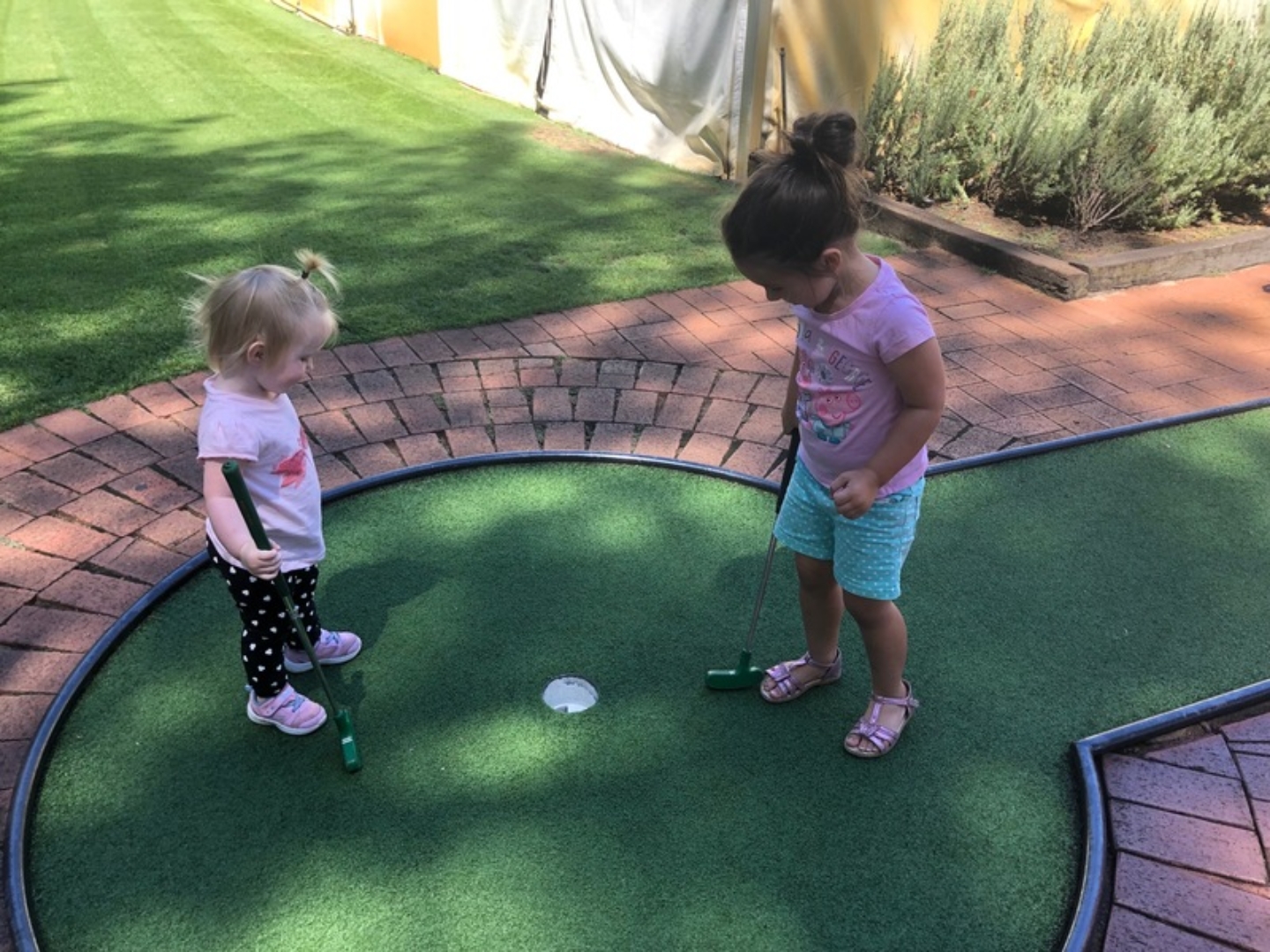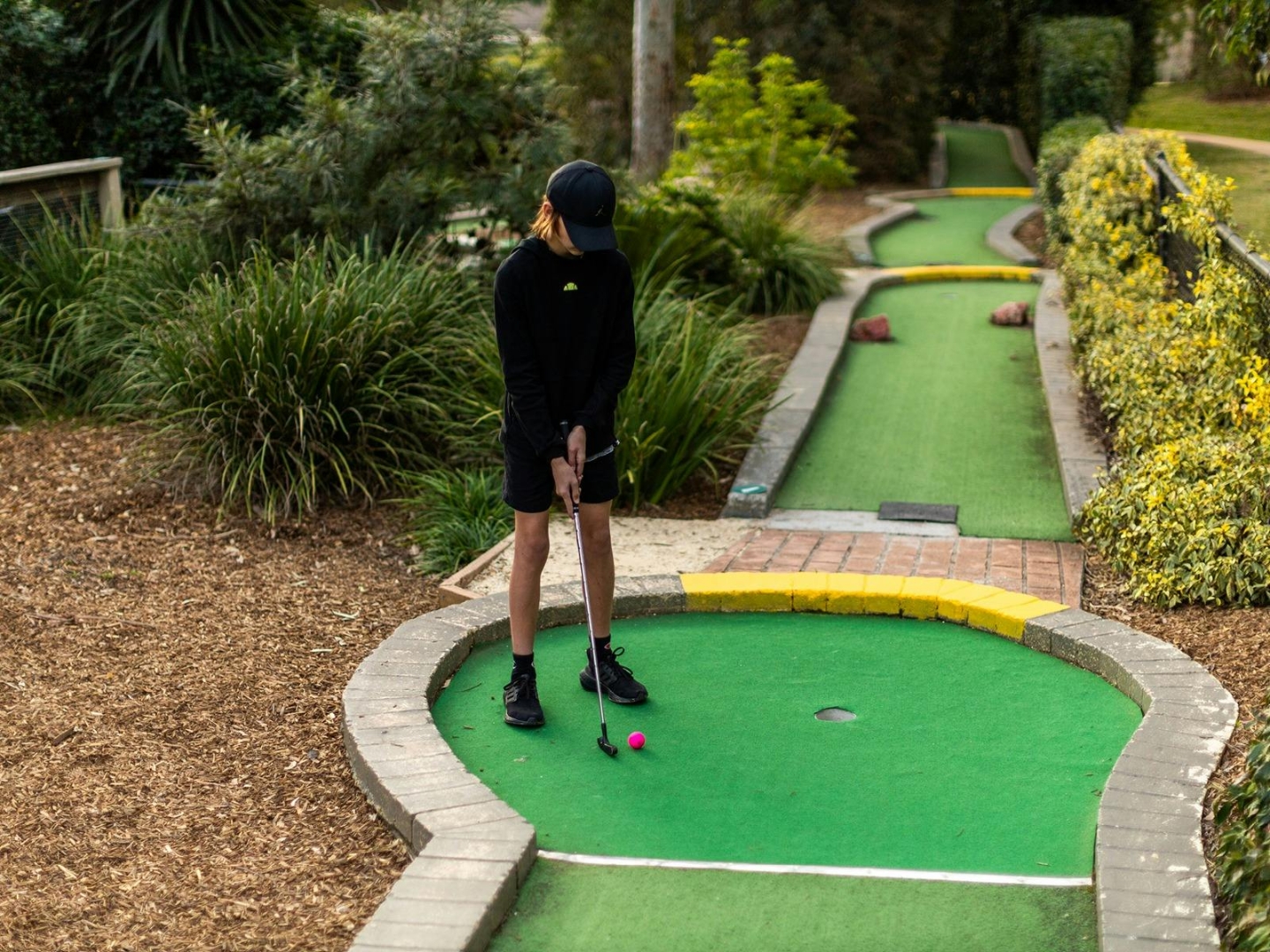
Bank shots feel random until you stop treating them like lucky bounces. The ball is telling you exactly what it wants to do, but most players aim at the hole instead of the wall contact point that actually creates the shot. If you want to play smarter at Augusta putt putt, the real upgrade is learning how to read the rebound before you ever swing.
That matters because bad bank shots waste strokes fast. Hit too hard and the ball rockets past the line. Aim at the wrong spot and the rebound dies in the wrong lane. Once you start reading angle, speed, and surface together, the game gets a lot more fun and a lot less dependent on hope.
How do bank shots work in mini golf?
A bank shot works when you use the wall as part of the path instead of seeing it as an obstacle. The goal is to send the ball into a specific point on the rail so it comes off at a useful angle toward the hole.
Most misses happen because players focus too much on the final target and not enough on the bounce point. On a bank shot, the wall contact point is the shot. Everything else comes after that.
How do you read angles in mini golf?
Start by standing behind the ball and tracing the path backward from the hole to the wall. Then pick the spot where you want the ball to touch. That wall spot becomes your true target.
This is where mini golf starts feeling less random. You are no longer guessing where the rebound might go. You are choosing a line, choosing a contact point, and giving the ball a better chance to follow a plan.
Why do players miss bank shots so often?
Most bank-shot misses come from three things: bad aim, too much speed, or ignoring the shape of the hole. Players often see an open wall and think any bounce will do. It will not.
A bank shot is sensitive to small mistakes. Hit the wall one inch off your intended point, and the whole line changes. Hit with too much force, and even a decent angle can turn ugly. That is why softer control usually wins over aggressive swings.
How hard should you hit a bank shot?
Usually softer than you think. A controlled stroke gives the ball time to take the rebound cleanly instead of flying off the wall like it is angry at you.
That does not mean babying every shot. It means matching pace to distance and rebound. If the bank line is short, lighter speed gives you more control. If the rebound has to carry farther, add enough pace to finish the shot without blasting through the read.
What changes when the wall is angled instead of straight?
Angled walls are where casual players start donating strokes. A straight rail is easier to picture. An angled wall changes the rebound faster and punishes lazy reads.
When you see an angled wall, slow down for a second. Look at how the ball will come off the surface, not just where it will hit. Those holes reward players who think one step ahead instead of firing away and hoping the course is feeling generous.
How do slopes affect bank shots?
Slope can quietly ruin a good read. Even if the rebound angle is solid, a slight tilt in the surface can drag the ball off line after contact. That is why two shots with the same angle can finish differently.
Check the full path, not just the wall. If the green leans left after the bounce, you may need to bank a touch wider. If it falls toward the cup, a softer speed might let the slope finish the job for you.
Should you play aggressively or safely on bank-shot holes?
That depends on what the hole is giving you. If the bank line is clean and the pace is manageable, go for it. If the angle is awkward or the penalty for missing is brutal, playing for an easy second putt is often the smarter move.
Good mini golf is not about showing off on every hole. It is about knowing when the flashy line is worth it and when the boring line saves strokes. That is one reason players improve quickly when they stop trying to force hero shots.
What is the best way for beginners to improve fast?
Keep it simple. Pick a wall spot. Use lighter speed. Commit to the line. Then watch what the ball actually does and adjust from there.
This is also why a place with plenty of variety helps. At Putt Putt Fun Center, players get 36 holes of mini golf, which means more chances to see different rebounds, rails, and trickier wall setups. Add in laser tag, batting cages, and the arcade in Augusta, GA angle people are often searching for, and the outing becomes bigger than one lucky round.
Why practice makes mini golf way more fun
Mini golf gets better once you understand why a shot worked. Suddenly the course feels less like chaos and more like a puzzle you can actually solve. Kids enjoy it more. Competitive friends get more into it. Parents are not just smacking the ball around and pretending that was the plan.
That is where places built for repeat visits really shine. A 36-hole course gives you more variety, more bank-shot reps, and more chances to test what you just learned instead of waiting for one random wall bounce to save you.
Read the bounce point, not just the hole
The fastest way to improve bank shots is to stop guessing and start reading the rebound. Aim at the wall spot that creates the line, control the speed, and let the course work with you instead of against you. If you want to put these tips to work at Augusta putt putt, contact Putt Putt Fun Center now!